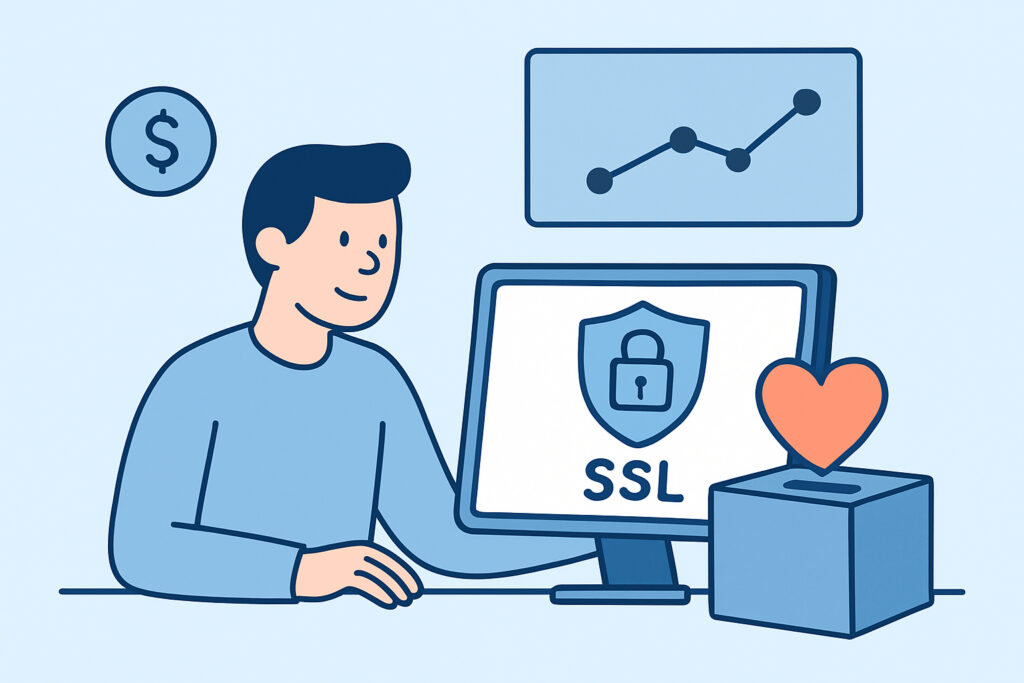
SSL monitoring for nonprofit organizations is one of those IT necessities that often gets pushed to the bottom of the priority list – right up until a certificate expires and the donation page goes offline. Nonprofits handle sensitive donor data, process online payments, and run campaigns that depend on continuous HTTPS uptime, yet most operate with skeleton IT staff and tight budgets. This article explains how nonprofits can set up effective SSL certificate monitoring without overspending.
Why Nonprofits Face Unique SSL Risks
Most nonprofit websites run on lean infrastructure, often maintained by a single volunteer admin or a part-time IT person juggling multiple responsibilities. Certificate renewals get missed not because no one cares, but because there is no system in place to flag them in time.
The consequences are concrete. When a nonprofit’s SSL certificate expires, browsers display a “Your connection is not private” warning before visitors even reach the site. Donors who see that screen do not wait around – they close the tab. A certificate outage during a fundraising campaign or giving season can wipe out weeks of effort in hours.
Add to that: many nonprofits rely on free tools like Let’s Encrypt, which issues 90-day certificates. Shorter validity periods mean more frequent renewals and a higher chance something slips through the cracks.
The Myth That SSL Monitoring Requires an Enterprise Budget
A common misconception is that SSL monitoring is something you pay for only if you are running a large e-commerce platform or a bank. In reality, free and low-cost SSL monitoring options exist and are more than sufficient for most nonprofit use cases.
This mistaken belief leads organizations to rely on calendar reminders or spreadsheet-based renewal tracking. Both fail at scale, and both fail when the person who set them up leaves. Automated monitoring costs far less than recovering from a certificate incident – in staff time, donor trust, and missed contributions.
What a Budget-Conscious Nonprofit Actually Needs
Not every SSL monitoring feature is worth paying for. Here is what matters most for a nonprofit on a tight budget:
Expiration alerts with enough lead time. Warnings at 30, 14, 7, and 1 day before expiration give small teams time to act without creating panic. One week’s notice is not enough if your sole IT person is on vacation.
Certificate chain validation. A certificate can appear valid at the top level but have a broken intermediate chain that causes errors in specific browsers or mobile devices. Monitoring should catch this automatically.
HTTPS enforcement checks. Many nonprofit sites mix HTTP and HTTPS content without realizing it. Mixed content warnings damage trust and can block payment processing integrations.
Email notifications. Nonprofits rarely have DevOps pipelines or Slack integrations. Email alerts are simple, reliable, and reachable by volunteers and board members alike.
Practical Setup: Monitoring a Nonprofit Site in Under 10 Minutes
Setting up automated SSL certificate monitoring does not require technical expertise beyond knowing your domain names. Here is a practical approach:
1. List every domain and subdomain your organization uses – main site, donation portal, event pages, member login areas, and any third-party subdomains you control.
2. Sign up for an SSL monitoring service that supports multiple domains under one account. This matters if your organization runs regional chapters or program-specific microsites.
3. Configure alert recipients. Include not just the primary IT contact but also a backup – an operations manager, a board member, or the executive director. Certificate emergencies happen when key people are unavailable.
4. Set alert thresholds at 30 days minimum. For Let’s Encrypt certificates with 90-day validity, a 30-day warning gives three full weeks to renew before things become genuinely risky.
5. Test the alert flow. Confirm that notifications actually arrive in the right inboxes before you depend on them in a real incident.
Free SSL Certificates Do Not Mean Free Risk
Let’s Encrypt has made HTTPS broadly accessible, and most nonprofits should use it. But free certificate issuance does not remove the operational risk of expiration. If auto-renewal fails – due to a DNS change, a server misconfiguration, or an expired hosting plan – the certificate will expire regardless of how it was originally issued.
What happens when an SSL certificate expires unexpectedly is often more disruptive than organizations anticipate. Browsers block access entirely, payment processors refuse connections, and email delivery to some servers can break. For a nonprofit running a year-end fundraising drive, even a two-hour outage can represent significant lost revenue and lasting reputational damage.
Monitoring the certificate separately from the renewal process is the safety net that catches failures before users do.
Prioritizing Which Domains to Monitor First
If resources are limited and monitoring needs to be phased in gradually, prioritize in this order:
Donation and payment pages first. These are where expired certificates cause immediate financial damage and expose donor data to risk.
Main public website second. Your homepage is usually the first thing a supporter sees. An SSL warning there kills credibility before any other content loads.
Member login portals third. Users with accounts are your most engaged stakeholders – losing their trust is harder to recover from than a bounce from a first-time visitor.
Program and campaign microsites last – but still include them. Forgotten subdomains are a frequent source of certificate surprises, precisely because they receive less day-to-day attention.
Frequently Asked Questions
Can a nonprofit use free SSL monitoring without sacrificing alert quality?
Yes. Free SSL monitoring tiers from reputable providers typically include expiration alerts and basic certificate validation, which covers the most common failure modes for small to mid-sized nonprofits. The key is confirming that the free tier includes multi-day advance warnings – not just a same-day notification when it is already too late to act calmly.
How often should SSL certificates be checked?
Daily checks are the industry standard and sufficient for most nonprofits. Certificates do not change status hour by hour under normal conditions, so checking more frequently adds no practical benefit for organizations without complex, high-volume infrastructure.
What if the nonprofit’s website is hosted by a third party?
The organization is still responsible for monitoring the certificate, even if the hosting provider manages renewal. Provider renewal processes fail, and those failures are rarely communicated proactively. Set up independent monitoring on your domain regardless of who manages the hosting relationship.
Practical SSL Security Without the Price Tag
Nonprofit organizations face the same SSL certificate risks as any other website – with fewer resources to recover from an incident. Effective SSL monitoring does not require a large budget. Prioritize expiration alerts, chain validation, and reliable notifications sent to more than one recipient. Cover the most critical domains first and expand coverage as the setup stabilizes. Automated monitoring costs a fraction of what a certificate outage costs in lost donations, damaged donor trust, and emergency staff hours. The hardest part is getting started – once monitoring is running, it takes care of itself.