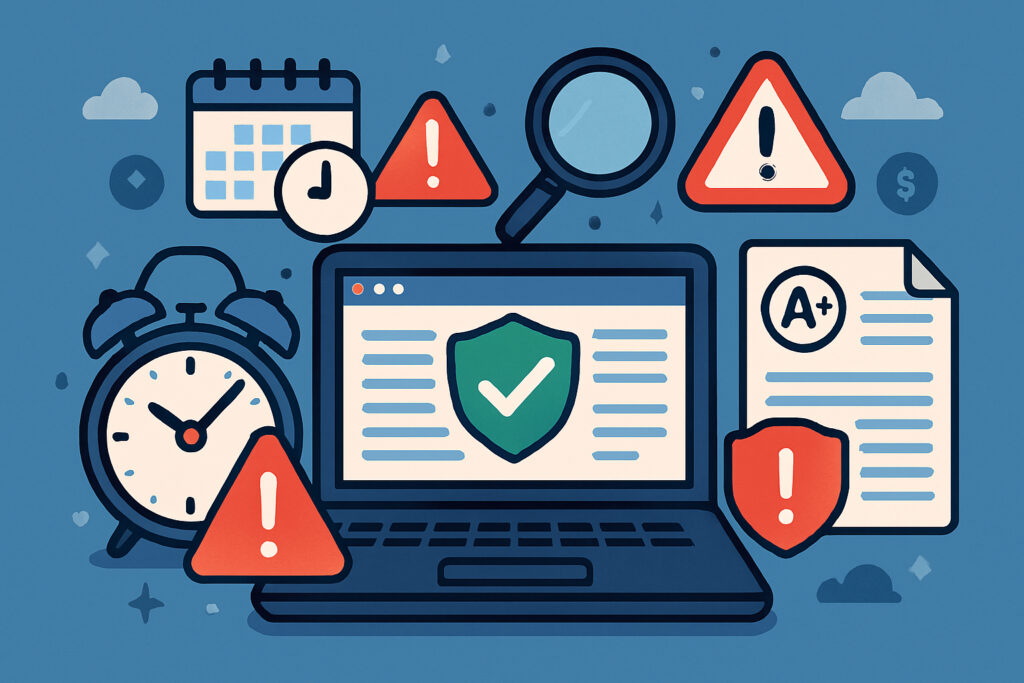
If you’re running a startup or a small business, your website is probably one of your most valuable assets. It’s your storefront, your sales pitch, and often the first impression a potential customer gets. And yet, I’ve seen so many founders and small business owners overlook one critical detail: their SSL certificate. It’s the kind of thing that works quietly in the background until it doesn’t — and when it breaks, the damage can be swift and painful.
Let me explain why SSL monitoring matters, why free tools make it a no-brainer for smaller companies, and how you can set yourself up so you never have to deal with an expired certificate catching you off guard.
The Real Cost of an Expired SSL Certificate
You know that browser warning — the big red “Your connection is not private” screen? That’s what your visitors see when your SSL certificate expires. Most people won’t click through it. They’ll leave. Instantly.
For a startup trying to build trust, or an SMB that depends on steady web traffic, even a few hours of that warning can mean lost sales, damaged reputation, and a drop in search rankings. Google has been factoring SSL into its ranking algorithm for years, so an expired cert doesn’t just scare away visitors — it actively pushes you down in search results.
The frustrating part is that this is entirely preventable. SSL certificates expire on a schedule. There’s nothing unpredictable about it. The problem is that people forget, or they assume their hosting provider handles it, or they set a calendar reminder that gets buried under a hundred other tasks.
A Lesson I Learned the Hard Way
A few years back, I was managing several websites for different projects. One morning, a client called and said their customers were complaining about a security warning. I checked, and sure enough, the SSL certificate had expired two days earlier. The auto-renewal had failed silently because of a DNS misconfiguration we’d made weeks prior, and nobody noticed.
It took about twenty minutes to fix, but the site had been showing that warning for two full days over a weekend. The client lost several online orders and spent the next week reassuring customers that their data was safe. That experience taught me something important: you cannot rely on “it should renew automatically” as your only safety net. You need something watching it independently.
Why Monitoring Matters More Than Auto-Renewal
Auto-renewal is great when it works. But there are plenty of reasons it can fail. DNS changes, hosting migrations, expired payment methods on your certificate provider account, or simple configuration errors can all cause a silent failure. And with Let’s Encrypt certificates renewing every 90 days, there are more opportunities for something to go wrong than with the old yearly certificates.
SSL monitoring acts as your independent safety net. A good monitoring service checks your certificate status regularly and sends you alerts well before expiration — not just one reminder, but multiple warnings at 30, 14, 7, and 1 day before the deadline. That gives you plenty of time to investigate and fix any issues, even if you’re busy with a product launch or dealing with other priorities.
But expiration is only part of the picture. Proper SSL monitoring also checks things like your certificate chain configuration, HSTS headers, Certificate Transparency logs, and OCSP stapling. These are technical details that most small business owners shouldn’t have to become experts in, but they directly affect your site’s security grade and trustworthiness.
Why Free Tools Are a Game-Changer for Smaller Companies
Startups and SMBs operate on tight budgets. Every subscription gets scrutinized. That’s exactly why free SSL monitoring tools are so important for this audience — they remove the cost barrier entirely.
When a service like SSLVigil offers free monitoring during its beta period, it means you can add a genuine security layer to your operations without touching your budget. You get the same kind of proactive alerts and security analysis that larger companies pay for, at zero cost and zero risk.
I’d argue that free SSL monitoring is actually more important for small companies than for enterprises. A large corporation has dedicated IT teams watching their infrastructure around the clock. A startup founder is wearing ten hats at once. The founder who’s also doing customer support, marketing, and product development is exactly the person who needs an automated system watching their certificates.
What to Look for in an SSL Monitoring Service
Not all monitoring is created equal. Here’s what actually matters when you’re choosing a tool:
Multiple advance warnings. A single reminder three days before expiration isn’t enough. Look for services that alert you at several intervals — 30, 14, 7, and 1 day gives you a comfortable window.
Certificate chain validation. Your certificate might be valid, but if the intermediate certificates are misconfigured, some browsers will still show warnings. Good monitoring catches this.
Security scoring. A clear grade from A+ to F helps you understand your SSL health at a glance without needing to interpret raw technical data.
Regular reporting. Monthly PDF reports give you documentation you can share with clients, partners, or your own team. This is especially useful if you manage websites for others.
Easy setup. If it takes more than a few minutes to add a domain, it’s too complicated. You should be able to enter your domain and start monitoring immediately.
How to Get Started in Five Minutes
Setting up SSL monitoring is genuinely simple. Go to your chosen monitoring service, create an account, and add your domain. That’s essentially it. The service will run an initial scan, give you a security grade, and start tracking your certificate’s expiration date. From that point on, you’ll receive alerts automatically.
If you manage multiple sites — which many SMB owners and freelancers do — add them all. It takes seconds per domain and gives you a single dashboard where you can see the status of everything at once. This is far more reliable than maintaining a spreadsheet of expiration dates or trusting your memory.
Common Myths About SSL Monitoring
“My hosting provider handles SSL, so I don’t need monitoring.” Hosting providers handle issuance and renewal, but they don’t always notify you when something fails. Monitoring is your independent verification that everything is actually working.
“I only have one website, so it’s not worth it.” One website is all it takes. If that’s your business, it deserves protection. Monitoring a single domain takes almost no effort to set up.
“SSL monitoring is only for large companies.” The opposite is true. Large companies have teams and tools already in place. Small businesses are the ones most vulnerable to the disruption an expired certificate causes.
Frequently Asked Questions
How often should SSL certificates be checked? Daily checks are ideal. Certificate status can change unexpectedly due to revocations or misconfigurations, so frequent automated scanning is far better than occasional manual checks.
Will monitoring slow down my website? No. External SSL monitoring checks your certificate from outside your server. It has no impact on your site’s performance or your visitors’ experience.
What if I use Let’s Encrypt with auto-renewal? You should still monitor. Auto-renewal fails more often than people think, and with 90-day certificates, you’re running the renewal process four times a year per domain. Monitoring catches failures before your visitors do.
Is free monitoring reliable enough? Absolutely. Free tiers and beta access to quality services like SSLVigil provide the same core monitoring capabilities. There’s no reason to fly blind when reliable tools are available at no cost.
Don’t Wait for a Problem to Start Monitoring
The best time to set up SSL monitoring is before you need it. It’s one of those small actions that takes five minutes today and saves you real headaches down the road. For startups and SMBs operating with limited resources and no room for preventable mistakes, free SSL monitoring isn’t just nice to have — it’s a fundamental part of running a professional, trustworthy online presence.
Your customers trust you with their data every time they visit your site. The least you can do is make sure that padlock icon in their browser is always there.