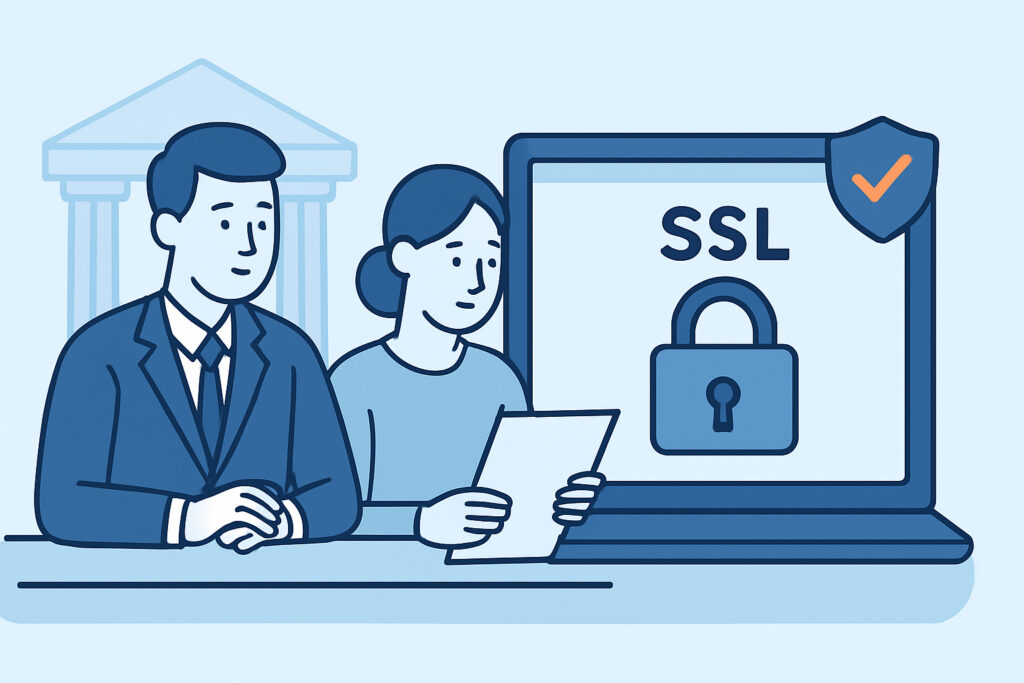
Client confidentiality is the foundation of legal practice, and an expired SSL certificate on a law firm’s client portal quietly undermines that foundation before anyone notices. Attorneys handling privileged documents, litigation files, and sensitive client communications through web-based portals need SSL monitoring that catches certificate problems before browsers start flashing warnings in front of clients.
Law firms occupy an unusual position in cybersecurity: they hold enormous volumes of sensitive data (financial records, medical histories, trade secrets, personal identifiable information) but often run leaner IT operations than the corporations they represent. That mismatch makes SSL certificate monitoring for law firms less of a nice-to-have and more of a professional responsibility issue.
Why Law Firms Are Attractive Targets for SSL-Related Attacks
Legal practices sit in the crosshairs for a simple reason: they aggregate other people’s secrets. A single mid-size firm might hold acquisition details for three companies, custody records for a dozen families, and settlement terms nobody wants public.
Attackers know that intercepting traffic to a law firm’s client portal or document-sharing system can yield material worth far more than the same effort spent elsewhere. A broken or misconfigured certificate chain, a certificate issued to an unexpected authority, or a lapsed HSTS policy all create windows where traffic could be intercepted or spoofed.
This is precisely where man-in-the-middle risks become real rather than theoretical, particularly on portals where clients upload signed contracts or discovery documents over what they assume is a secure connection.
The Client Portal Problem
Most firms now run some form of client-facing portal – for document exchange, billing, or case status updates. These systems are often built on third-party platforms or plugins, deployed once, and rarely revisited by whoever set them up.
A common scenario: the managing partner approves a new client intake portal, an outside contractor configures it with a certificate, and eighteen months later nobody on staff remembers the renewal date. When the certificate lapses, clients see “Your connection is not private” and immediately question whether the firm can be trusted with their case.
That reaction isn’t paranoia. Clients hiring lawyers for sensitive matters (divorce, criminal defense, corporate disputes) are already primed to notice anything that looks like carelessness. A browser security warning at the wrong moment can cost a client relationship that took years to build.
What Continuous Monitoring Actually Catches
Reactive certificate management – checking when someone complains – fails law firms specifically because client trust doesn’t recover the way a retail cart-abandonment metric does. Effective monitoring needs to cover several distinct failure modes:
Expiration windows. Certificates should be flagged well before the deadline, not the morning of. Staggered alerts at 30, 14, 7, and 1 days out give whoever manages the domain – often an outsourced IT contractor working across multiple clients – enough runway to actually act, rather than scrambling.
Certificate chain integrity. An incomplete or misordered chain can cause failures on some browsers and mobile devices while working fine on others, meaning the problem goes unnoticed internally while opposing counsel or a client sees an error.
Issuer changes. If a certificate suddenly shows a different certificate authority than expected, that’s worth investigating immediately – it can indicate misconfiguration or, in rarer cases, a compromise.
HSTS and transport security settings. Client portals handling privileged communications should enforce HTTPS strictly, with no fallback to plaintext connections.
Certificate Transparency logs. Public CT logs record every certificate issued for a domain. Monitoring them can reveal a rogue or unauthorized certificate issued for the firm’s domain before it’s ever used maliciously.
Firms building out this practice for the first time benefit from starting with a full inventory of every domain and subdomain running a certificate – client portals, e-filing integrations, marketing sites, and any legacy systems still pointed at production DNS.
Busting the Myth: “We Use a Big-Name Host, So We’re Covered”
A persistent misconception among smaller and mid-size firms is that using a reputable hosting provider or website builder means certificate management is handled automatically and permanently. In reality, most hosting platforms only auto-renew certificates tied to their own DNS and default domains – custom domains, subdomains for client portals, and third-party integrations frequently fall outside that automation.
It’s also common for firms to migrate hosting providers or switch case management software and leave an old subdomain live with an aging certificate nobody is watching anymore. Auto-renewal handles the common case; it does not handle every case, and the exceptions are exactly where outages happen.
Building a Practical Monitoring Routine
A workable approach for a law firm’s IT lead or managed service provider looks like this:
1. Catalog every subdomain serving client-facing content, including e-filing portals and payment systems.
2. Set up automated alerts well ahead of expiration, not just a same-day notice.
3. Review the certificate chain and HSTS configuration quarterly, not only when something breaks.
4. Watch Certificate Transparency logs for unexpected issuance events tied to the firm’s domains.
5. Generate a monthly summary report that non-technical partners can glance at to confirm the firm’s SSL posture, similar in spirit to a compliance grade.
Firms with multiple offices or many subdomains benefit from a centralized view rather than checking each site manually, since manual tracking is exactly where things fall through the cracks once a firm passes a handful of domains.
Frequently Asked Questions
Does SSL monitoring satisfy a law firm’s ethical duty of confidentiality?
SSL monitoring is one component of a broader confidentiality and security program, not a complete solution on its own. Bar association guidance on technology competence increasingly expects attorneys to take reasonable steps to secure client communications, and maintaining valid, correctly configured certificates is a baseline part of that, alongside access controls, encryption at rest, and staff training.
How often should a law firm check its SSL certificate status?
Continuous automated monitoring is preferable to periodic manual checks, since certificate issues (expiration, chain errors, issuer changes) can occur at any time and manual quarterly reviews leave long gaps of exposure. Automated alerts before expiration remove the dependence on someone remembering a renewal date.
What happens if a client-facing portal’s certificate expires during active litigation?
Clients and opposing counsel may be unable to access the portal, browsers will display security warnings that discourage continued use, and any documents exchanged during the outage window could be delayed at a critical moment. Beyond the operational disruption, it raises legitimate questions about the firm’s data-handling practices at exactly the wrong time.
Client trust in a law firm is built slowly and can erode in the few seconds it takes a browser to display a security warning. Treating SSL certificate monitoring as a standing operational practice, not an occasional task, keeps that trust intact and keeps privileged communications actually private.