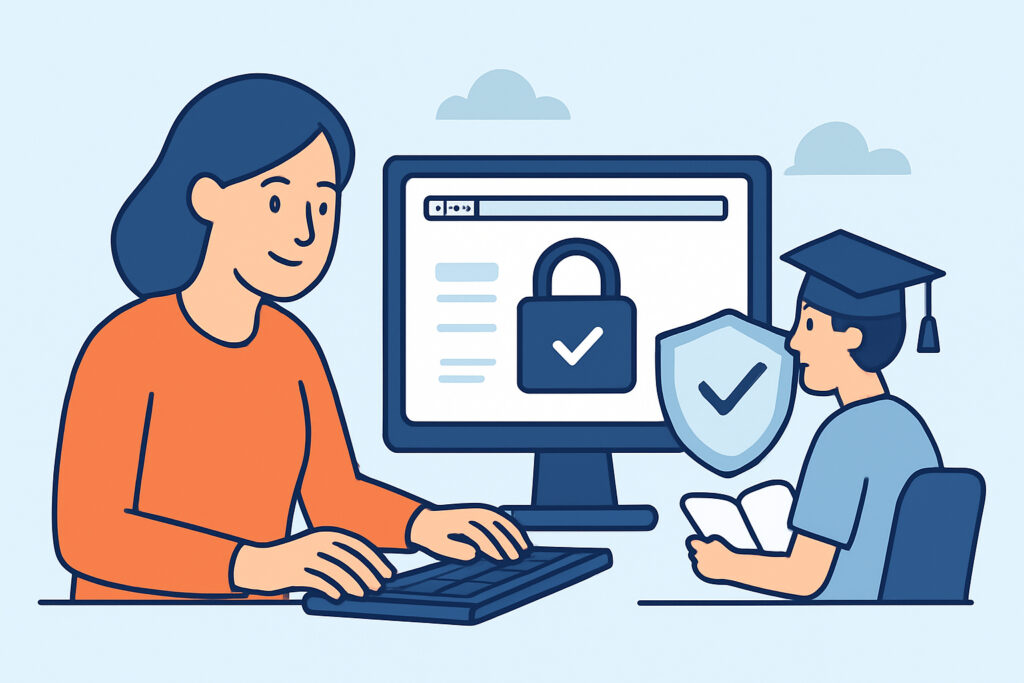
Educational institutions today handle millions of sensitive student records, from personal information to academic transcripts, making SSL monitoring for education websites absolutely critical for data protection. These websites must maintain secure HTTPS connections 24/7 to comply with federal privacy laws and protect vulnerable student populations from data breaches.
Educational IT departments face unique challenges when securing web infrastructure. Unlike commercial websites focused on sales conversions, education websites must balance accessibility for diverse user groups while maintaining the highest security standards for student data protection.
Why Education Websites Are High-Value Targets
Student data represents a goldmine for cybercriminals. A single university database contains social security numbers, addresses, financial aid information, and academic records for thousands of individuals. When SSL certificates fail on education websites, this sensitive information becomes vulnerable to interception during transmission.
Consider a typical college enrollment period where thousands of students submit applications containing personal and financial data. An expired SSL certificate during this critical window doesn’t just create user frustration – it exposes every form submission to potential man-in-the-middle attacks.
Education websites also serve multiple audiences simultaneously. Faculty access grade systems, students check transcripts, parents view billing information, and administrators manage sensitive records. Each user interaction requires secure SSL protection to maintain data integrity across these diverse access patterns.
FERPA Compliance and SSL Security Requirements
The Family Educational Rights and Privacy Act (FERPA) mandates specific protections for student educational records. While FERPA doesn’t explicitly require HTTPS, it demands that institutions implement appropriate safeguards to prevent unauthorized access to student data.
SSL certificates serve as the primary technical control for protecting data in transit. When educational institutions transmit student records without proper SSL encryption, they risk FERPA violations that can result in federal funding penalties. The Department of Education has increasingly scrutinized institutions following data breaches linked to inadequate web security.
Many education professionals mistakenly believe that internal campus networks provide sufficient security for student data transmission. However, campus WiFi networks, library computers, and dormitory internet connections all represent potential interception points where unencrypted data can be compromised.
Proper SSL monitoring ensures continuous FERPA compliance by verifying that all student data transmissions remain encrypted. This includes monitoring certificate chain validity, ensuring strong cipher suites, and maintaining proper HSTS configuration to prevent downgrade attacks.
SSL Monitoring for Multiple Education Domains
Educational institutions typically operate dozens of subdomains and separate websites. A large university might manage admissions.university.edu, library.university.edu, athletics.university.edu, and department-specific sites – each requiring its own SSL certificate management strategy.
Wildcard SSL certificates often seem like an efficient solution for education websites, but they introduce monitoring complexity. A single wildcard certificate failure can simultaneously compromise multiple services, from student information systems to faculty email portals.
Department-level websites present particular challenges. Academic departments often manage their own web presence with limited IT oversight. These sites frequently contain research data, student project information, and faculty contact details that require SSL protection but may lack dedicated security monitoring.
Effective SSL monitoring for education websites requires tracking certificate expiration across all institutional domains, including forgotten subdomains that may still process sensitive data. Many security incidents in education stem from neglected department websites with expired certificates that continue processing student information.
Managing SSL Certificates During Academic Cycles
Educational institutions experience predictable traffic spikes during registration periods, final exams, and application deadlines. SSL certificate failures during these critical windows can prevent thousands of students from accessing essential services.
Fall registration periods represent the highest risk timeframe for education websites. Students simultaneously access course catalogs, submit schedule changes, and process financial aid – all requiring secure connections. An expired certificate during registration can force emergency certificate renewal while systems remain unavailable to users.
Summer maintenance windows provide optimal timing for SSL certificate renewal and security updates. However, many institutions fail to properly schedule certificate renewals around academic calendars, leading to expiration during peak usage periods.
Proactive SSL monitoring becomes essential for maintaining service availability during academic deadlines. Monitoring systems should provide extended advance notice – at least 30 days – to allow coordination with academic scheduling and provide sufficient renewal time before critical periods.
Third-Party Integration Security Challenges
Modern education websites integrate numerous third-party services for payment processing, learning management systems, and student communication platforms. Each integration point represents a potential SSL security gap that requires monitoring.
Learning management systems like Canvas, Blackboard, or Moodle often run on separate domains with independent SSL certificates. Students accessing course materials may transition between institutional domains and third-party platforms, requiring consistent SSL protection across all touchpoints.
Payment processors handling tuition and fee transactions require PCI DSS compliance, which includes specific SSL certificate requirements. Educational institutions must monitor not only their own SSL certificates but also verify that integrated payment systems maintain proper certificate health and security configurations.
Third-party SSL certificate monitoring helps education IT teams maintain visibility into external services processing student data. This includes verifying certificate transparency compliance and ensuring that integrated services maintain appropriate security standards.
Mobile Access and SSL Certificate Considerations
Students increasingly access education websites through mobile devices, often on campus WiFi networks or cellular connections. Mobile browsers handle SSL certificate errors differently than desktop browsers, potentially exposing users to security warnings they may not understand.
Campus WiFi networks present unique SSL challenges. Students connecting through institutional wireless networks may encounter certificate warnings for legitimate education websites if network security appliances interfere with certificate validation. Proper SSL monitoring helps identify these network-related certificate issues before they affect user access.
Mobile applications accessing student data must also maintain proper SSL certificate validation. Custom mobile apps developed for student services should implement certificate pinning and proper certificate chain validation to prevent man-in-the-middle attacks on mobile connections.
Common SSL Monitoring Mistakes in Education
Educational institutions frequently make critical errors in SSL certificate management that compromise student data security. Understanding these common mistakes helps prevent security incidents.
Many education IT departments rely on manual certificate tracking using spreadsheets or calendar reminders. This approach fails consistently when staff turnover occurs or during busy academic periods. Manual tracking cannot scale effectively across the numerous domains typical of educational institutions.
Certificate auto-renewal systems often fail silently, leaving institutions with expired certificates during critical periods. Many IT teams assume that Let’s Encrypt or other automated certificate authorities handle all renewal scenarios, but domain verification failures, DNS changes, or server configuration issues can prevent automatic renewal.
Another frequent mistake involves monitoring only primary domains while neglecting department websites, research platforms, and legacy systems that continue processing student data. These forgotten systems often maintain expired certificates for months, creating security vulnerabilities that attackers can exploit.
Implementing Comprehensive SSL Monitoring
Effective SSL monitoring for education websites requires continuous certificate health verification across all institutional domains. Monitoring systems should track certificate expiration, validate certificate chains, and verify security configuration compliance.
Start by inventorying all education websites that process student data, including department sites, research platforms, and third-party integrations. This inventory should include certificate details, renewal schedules, and responsible personnel for each domain.
Configure monitoring alerts with sufficient advance notice for certificate renewal. Education websites benefit from 30, 14, 7, and 1-day expiration warnings to provide multiple opportunities for renewal coordination with academic schedules.
SSL monitoring best practices include validating certificate chain correctness, monitoring HSTS configuration, and tracking certificate transparency compliance. These additional checks help ensure comprehensive security beyond basic expiration monitoring.
Regular security reports provide administrators with clear visibility into SSL certificate health across all institutional websites. Monthly reports should include security grades for each monitored domain, enabling proactive identification of configuration issues or security gaps.
Frequently Asked Questions
How often should education websites check SSL certificate status?
Educational institutions should monitor SSL certificates continuously, with automated checks every few hours. Student data access occurs around the clock, making real-time certificate health verification essential for maintaining security and service availability.
What SSL certificate types work best for education websites?
Extended Validation (EV) certificates provide the highest trust indicators for education websites handling sensitive student data. However, Domain Validated (DV) certificates from reputable authorities offer sufficient security for most educational applications when properly monitored and maintained.
Do education websites need special SSL monitoring during maintenance windows?
Yes, maintenance activities frequently disrupt SSL certificate functionality through configuration changes or server updates. Enhanced monitoring during maintenance windows helps detect certificate issues before they affect student access to critical services.
Protecting Student Trust Through Proactive Monitoring
SSL certificate failures damage institutional reputation and student trust in addition to creating security vulnerabilities. When students encounter browser security warnings on education websites, they question the institution’s ability to protect their personal information.
Proactive SSL monitoring ensures that education websites maintain the security standards students and parents expect from educational institutions. Consistent certificate health across all institutional websites demonstrates a commitment to data protection that builds confidence in digital education services.
Students today understand digital security risks and expect educational institutions to implement appropriate safeguards for their personal information. Comprehensive SSL monitoring provides the foundation for maintaining this trust while ensuring compliance with federal privacy regulations.