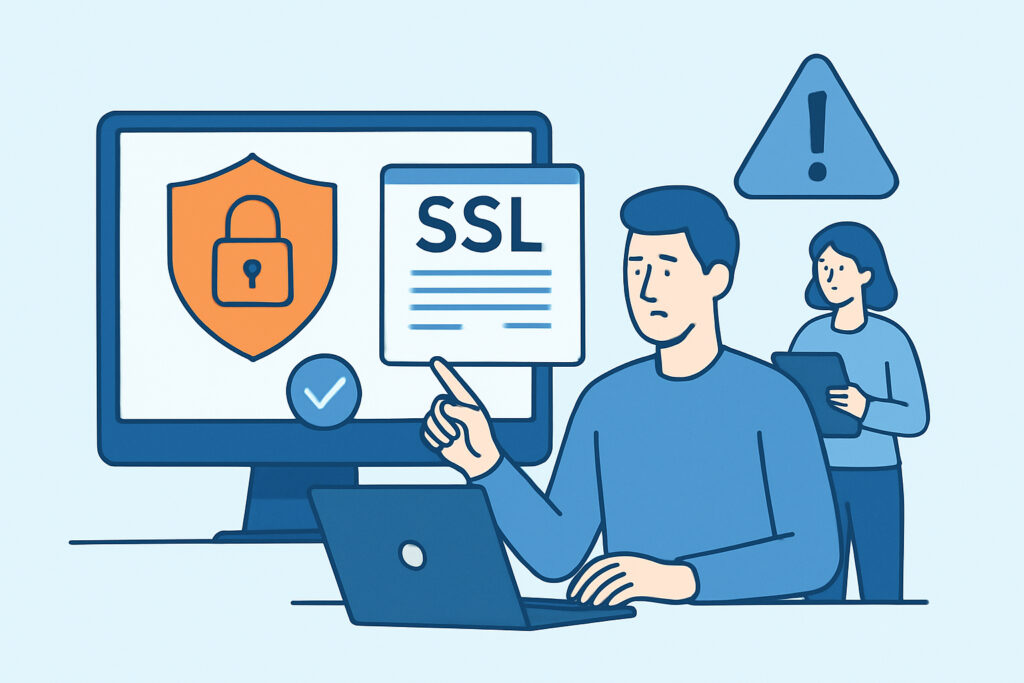
Most incident response plans focus on obvious threats like malware, DDoS attacks, and data breaches, but overlook a critical vulnerability that can instantly cripple your entire web presence: SSL certificate failures. SSL certificate monitoring deserves a central role in your incident response strategy because certificate-related outages often cascade faster and impact more systems than traditional security incidents.
When an SSL certificate expires or becomes misconfigured, the effects ripple through your infrastructure immediately. Unlike gradual performance degradation or isolated security breaches, SSL issues create binary failures – your services either work or they don’t.
The Hidden Cascade Effect of SSL Failures
SSL certificate problems don’t stay contained. A single expired certificate can trigger a domino effect across interconnected systems that most teams don’t anticipate during incident planning.
Consider a typical scenario where an API gateway certificate expires at 3 AM on a weekend. Within minutes, mobile applications start failing authentication, third-party integrations begin timing out, and monitoring systems lose connectivity to dependent services. The payment processor rejects transactions due to TLS handshake failures, while the content delivery network starts serving mixed content warnings.
Each failure generates its own alerts, creating noise that masks the root cause. Security teams waste precious time investigating phantom breaches while customer-facing services remain down. This cascade effect explains why SSL-related incidents often take longer to resolve than their apparent simplicity would suggest.
The most insidious aspect is how modern microservices architectures amplify these failures. API endpoints and webhooks depend heavily on certificate validation, so one expired certificate can break dozens of service integrations simultaneously.
Why Traditional Monitoring Misses SSL Issues
Here’s a common misconception: many teams believe their existing uptime monitoring catches SSL problems. Standard HTTP monitors often miss certificate issues because they focus on response codes and page content, not the underlying TLS connection health.
A website can return HTTP 200 status codes while simultaneously serving browsers invalid certificates. Users see security warnings, but monitoring systems report everything as healthy. This blind spot persists until enough user complaints accumulate or revenue drops become noticeable.
Certificate chain problems present another monitoring challenge. Intermediate certificates can become invalid while root certificates remain functional, creating intermittent failures that affect only certain browsers or geographic regions. Traditional monitoring rarely catches these edge cases because it typically tests from single locations using standard configurations.
OCSP and Certificate Transparency compliance add additional layers of complexity that basic monitoring overlooks. HSTS configuration changes can suddenly make previously functional certificates unusable, but these changes only manifest under specific conditions that simple uptime checks don’t replicate.
Building SSL Awareness Into Incident Classification
Effective incident response requires proper categorization, and SSL certificate issues need their own classification framework. Not all certificate problems demand the same response urgency or resource allocation.
Critical SSL incidents include expired certificates on primary domains, broken certificate chains affecting customer transactions, and revoked certificates discovered through Certificate Transparency logs. These require immediate escalation and can justify waking on-call engineers.
High-priority SSL issues encompass certificates expiring within 7 days, HSTS policy violations, and weak cipher suite configurations that expose security vulnerabilities. Weak cipher suites might not cause immediate outages, but they create compliance risks and potential attack vectors.
Medium-priority SSL concerns involve certificates nearing 30-day expiration windows, suboptimal OCSP configurations, and Certificate Transparency monitoring gaps. These provide sufficient time for planned remediation without emergency response protocols.
Create specific runbooks for each category. Critical SSL incidents should trigger automatic failover to backup certificates when possible, while high-priority issues should initiate certificate renewal workflows and stakeholder notifications.
Integration Points With Existing Response Workflows
SSL certificate monitoring shouldn’t exist in isolation – it needs integration points with your current incident management tools and processes. Most organizations already have established workflows for service desk tickets, escalation procedures, and communication templates.
Configure SSL monitoring alerts to automatically create incidents in your existing ticketing system with appropriate severity levels. Include essential context like affected domains, certificate expiration dates, and validation failure details. This prevents critical information from getting lost during high-stress incident response situations.
Establish clear ownership boundaries between different teams. Network operations might handle certificate installation, but application teams need visibility into how certificate changes affect their services. DevOps teams particularly benefit from automated workflows that can trigger certificate renewal processes without manual intervention.
Connect SSL monitoring data to your existing dashboards and status pages. During active incidents, stakeholders need centralized visibility into both symptom (service disruption) and cause (certificate failure) without switching between multiple monitoring platforms.
Response Time Objectives for Certificate Incidents
SSL certificate incidents demand different response time objectives than traditional IT issues because certificate problems often have hard deadline constraints that can’t be extended.
For critical production certificates, establish a 15-minute response time objective. This provides sufficient time to implement temporary fixes like DNS failover or load balancer reconfiguration while working on permanent solutions. Certificate replacement typically requires 30-60 minutes depending on your deployment automation maturity.
High-priority certificate issues warrant 2-hour response times during business hours and 4-hour response times during off-hours. This timeframe allows for proper change management processes while still addressing issues before they become critical.
Medium-priority SSL concerns should target 24-hour response initiation with resolution within one week. These longer timeframes accommodate proper planning, testing, and coordinated deployment schedules.
Build buffer time into these objectives. Certificate validation can take several minutes to propagate globally, and DNS changes affecting certificate validation may require additional propagation delays.
Common Response Mistakes to Avoid
Teams frequently make predictable mistakes during SSL certificate incidents that extend downtime and create secondary problems. Learning from these patterns improves response effectiveness.
Never bypass certificate validation “temporarily” in production systems. This creates security vulnerabilities and often becomes permanent when teams forget to re-enable validation after resolving the original issue. Instead, implement proper certificate replacement or failover procedures.
Avoid rushing certificate installation without proper testing. Invalid certificate chains, missing intermediate certificates, and private key mismatches can make problems worse. Always validate new certificates in staging environments first, even during emergency response situations.
Don’t ignore the broader ecosystem impact when replacing certificates. Many organizations discover too late that hardcoded certificate fingerprints in mobile applications or API clients break when certificates change, even when the new certificates are technically valid.
Resist the temptation to extend certificate validity periods beyond standard practices during emergency renewals. While longer validity periods seem like they prevent future incidents, they actually increase security risks and may violate compliance requirements.
Frequently Asked Questions
How often should incident response teams test SSL certificate failure scenarios?
Quarterly SSL incident simulations provide adequate practice without excessive disruption. Include scenarios like weekend certificate expirations, certificate authority outages, and cascading failures affecting multiple services. These exercises reveal gaps in documentation, tool access, and team coordination that only become apparent under pressure.
Should SSL certificate monitoring alerts wake on-call engineers outside business hours?
Yes, but only for certificates expiring within 24-48 hours or already expired certificates affecting production services. Certificates expiring within 7-30 days should generate alerts during business hours only. Configure different alert thresholds for different service tiers – critical customer-facing services need more aggressive alerting than internal development environments.
What certificate information should be included in incident response documentation?
Document certificate serial numbers, issuing authorities, expiration dates, and affected hostnames for every incident. Include before/after certificate details when replacements occur. This information proves invaluable for forensic analysis, compliance auditing, and identifying patterns in certificate management failures that could prevent future incidents.
Building Long-Term SSL Resilience
Effective incident response planning extends beyond immediate crisis management to building systems that prevent SSL certificate incidents from occurring. The goal isn’t just faster response times, but reducing the frequency and impact of certificate-related disruptions through proactive monitoring and automated remediation workflows.
Regular incident response plan reviews should include lessons learned from SSL certificate failures, updated contact information for certificate authorities, and validation of backup certificate procedures. The investment in comprehensive SSL monitoring and response planning pays dividends through reduced downtime, improved customer trust, and more predictable service operations.